
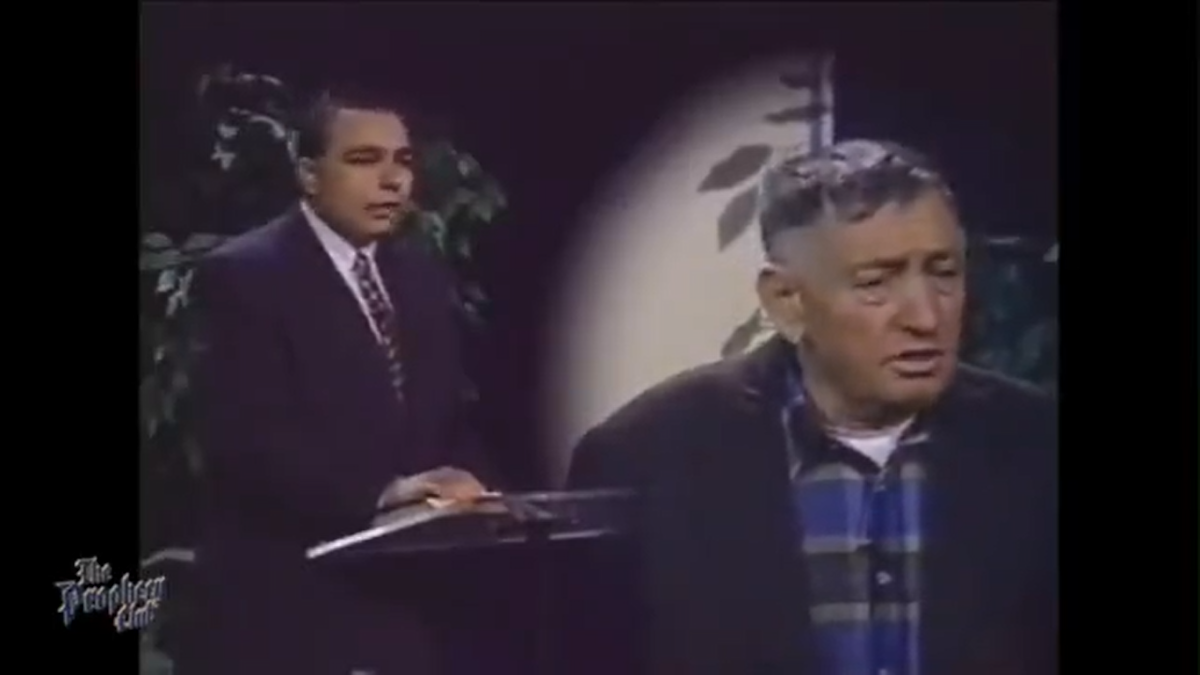

This article has been receiving a significant increase in visits, and because people are seeking clarity rather than confusion, I believe it is important to clarify my position, strengthen the biblical foundation, warn against untested prophetic claims, and encourage readers to return to Scripture.
I am offering a sincere warning about The Prophecy Club. Over time, it has become clear to me that the platform is built upon showmanship rather than the biblical mantle of prophetic office. Many of the speakers featured there rely upon emotional appeals, sensational claims, dramatic storytelling, dreams, visions, and purported supernatural experiences in ways that can draw attention away from the authority of the written Word of God. This environment can encourage spiritual confusion rather than biblical discernment. For these reasons, I strongly caution readers to stay away from The Prophecy Club and to remain anchored in Scripture rather than in personalities, performances, or claims of private revelation.
I acknowledge that Dumitru Duduman reportedly suffered greatly, and suffering alone does not invalidate a person’s testimony. However, suffering also does not authenticate prophetic authority. A person’s sincerity, persecution, extraordinary experiences, or personal sacrifices do not establish that his prophetic claims came from God. Such claims must be tested by the Word of God.
My concerns arise from Scripture being taken out of context, sensationalism, claims of prophetic authority without sufficient biblical grounding, ministerial behavior resembling spiritual peddling, and teachings that add to or distort the Word of God.
I listened to the reasons why Duduman’s teachings have influenced many people, but I do not find his identification of America as “Mystery Babylon” established by Scripture. Jeremiah 50–51 concerns judgment upon Babylon, while Revelation 17–18 presents Babylon through apocalyptic and symbolic imagery. Whatever conclusions a reader reaches concerning the ultimate fulfillment of Revelation 17–18, Scripture itself never identifies the United States of America as Babylon. Therefore, no teacher has biblical authority to present that identification as though God has explicitly revealed it in Scripture.
Duduman repeatedly used two primary portions of Scripture to support his claim that the United States is Mystery Babylon: Jeremiah 50–51, including passages such as Jeremiah 50:8–9, 50:29, 51:7, 51:13, and 51:47–48; and Revelation 17–18, including Revelation 17:1–6, 17:15, 18:2–3, 18:8, and 18:11–13. He applied these passages symbolically to America and its future destruction. Yet the essential problem remains: none of these passages identifies America. Similarities perceived by an interpreter are not the same thing as an identification made by Scripture.
This is particularly important when considering the nature of biblical prophecy itself. Peter writes:
“Knowing this first, that no prophecy of the scripture is of any private interpretation. For the prophecy came not in old time by the will of man: but holy men of God spake as they were moved by the Holy Ghost.”
— 2 Peter 1:20–21
Biblical prophecy did not originate in the private will, imagination, or invention of men. Its source was God. Peter directs us to the “more sure word of prophecy” (2 Peter 1:19), not to untestable private revelations. Therefore, Christians are not required to accept someone’s dream, vision, angelic encounter, secret message, or claimed revelation merely because that person declares that it came from God. Scripture remains the standard by which such claims are tested.
“Beloved, believe not every spirit, but try the spirits whether they are of God: because many false prophets are gone out into the world.”
— 1 John 4:1
“Prove all things; hold fast that which is good.”
— 1 Thessalonians 5:21
Even an extraordinary supernatural claim cannot override the revealed Word:
“But though we, or an angel from heaven, preach any other gospel unto you than that which we have preached unto you, let him be accursed.”
— Galatians 1:8
This is also why claims of journeys into heaven, prophetic tours of heaven, and messages supposedly brought back from heaven demand especially serious biblical scrutiny.
Jesus Christ said:
“And no man hath ascended up to heaven, but he that came down from heaven, even the Son of man which is in heaven.”
— John 3:13
Scripture does record an extraordinary experience in which Paul speaks of a man who was “caught up to the third heaven” (2 Corinthians 12:2). Yet rather than returning with elaborate descriptions to be marketed as new revelation for the church, he says that the man “heard unspeakable words, which it is not lawful for a man to utter” (2 Corinthians 12:4). The contrast should cause Christians to exercise great caution toward modern ministries built upon detailed heavenly journeys, supernatural tours, secret information, and messages allegedly brought back for others to receive.
The biblical response to supernatural claims is therefore not gullibility but discernment. An extraordinary story does not become revelation simply because someone attaches the name of God to it.
The prophets themselves repeatedly warned against people who claimed divine authority for revelations God had not given them. Jeremiah records:
“I have not sent these prophets, yet they ran: I have not spoken to them, yet they prophesied.”
— Jeremiah 23:21
And again:
“The prophet that hath a dream, let him tell a dream; and he that hath my word, let him speak my word faithfully.”
— Jeremiah 23:28
Ezekiel likewise condemns prophets who follow “their own spirit” and claim to have seen things God did not reveal (Ezekiel 13:3, 6–9). These warnings are profoundly relevant whenever people claim supernatural authority for dreams, visions, predictions, or messages that cannot be established from Scripture.
Ken Peters’ teachings raise similar red flags for me. For example, his claim that Lot was wicked simply for choosing land near Sodom contradicts the inspired description given in 2 Peter 2:7–8. Peter explicitly calls him “just Lot” and then “that righteous man,” describing him as vexed by the unlawful deeds surrounding him. Whatever errors of judgment may be examined in Lot’s life, Scripture itself identifies him as righteous. Teaching otherwise demonstrates the danger of allowing a dramatic interpretation to override what the biblical text explicitly says.
This kind of doctrinal carelessness is not minor. It shapes how people understand Scripture and how they discern spiritual claims.
Scripture repeatedly warns against false prophets, false visions, divination, deceptive dreams, teachers who distort God’s Word, and people who claim divine authority for messages originating from themselves. Christians therefore have both the right and the responsibility to test what they hear rather than surrendering discernment to someone claiming, “God told me,” “an angel showed me,” or “I was taken to heaven and shown these things.”
For this reason, I urge listeners to stay clear of Sid Roth, self-proclaimed apostles, self-proclaimed prophets, and ministries built upon dreams, visions, sensational predictions, supernatural experiences, and private revelations presented as messages from God.
The defense against spiritual deception is not another personality claiming greater supernatural knowledge. It is the Word of God.
Suffering does not establish a prophet.
Sincerity does not establish a prophet.
Popularity does not establish a prophet.
A supernatural experience does not establish a prophet.
A dream does not establish a prophet.
A vision does not establish a prophet.
God has not left His people defenseless against claims of secret revelation. We are commanded to try the spirits, prove all things, reject another gospel even if presented by an angel, and hold fast to what God has revealed.
The Bible is our anchor, not modern prophetic personalities.
“Thy word is truth.”
— John 17:17